A flooded basement doesn't wait for business hours, and neither do we. Aqua Guard Water Damage keeps trucks staged around Fowler so a licensed technician can be pulling standing water within the hour, not scheduling you for next Tuesday.
Call +1-844-578-1604 Now
Our Fowler technicians hold IICRC water restoration certifications and carry that training into every job, from a Category 1 clean-water leak to a Category 3 sewage backup. We're not a call center routing you to a random subcontractor; we're the crew that shows up.
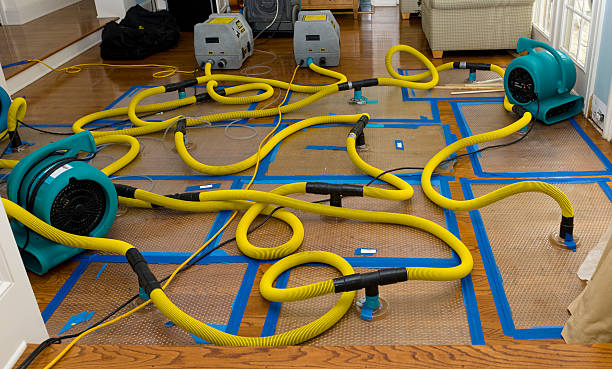
Every technician on our Fowler roster is background-checked, licensed, and insured, and every truck is stocked with commercial-grade air movers, low-grain-refrigerant dehumidifiers, and antimicrobial treatment for contaminated water intrusion.
We invest in ongoing training as drying standards and equipment evolve, rather than treating a technician's initial certification as the finish line.

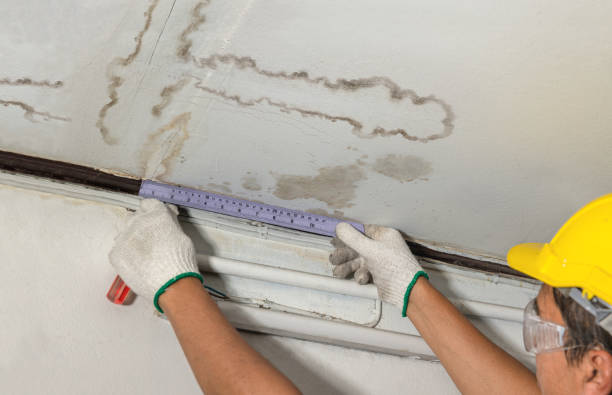
A stain that keeps reappearing after you paint over it is a signal, not a coincidence — the moisture source behind the wall hasn't been addressed and needs a moisture meter reading, not a fresh coat of paint. Repainting without finding the source just hides the problem for a few more weeks.
A persistent musty smell in a basement or bathroom usually means microbial growth has already started somewhere you can't see, often inside wall cavities or under flooring. Air fresheners will mask it temporarily but won't touch the actual source.
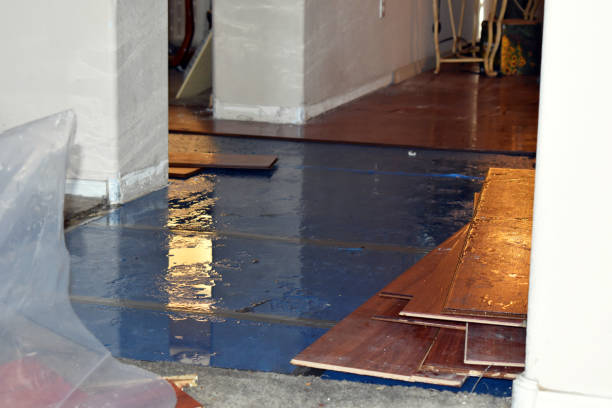
Carpet that stays damp or squishy days after you last noticed water is holding moisture against the subfloor, which is exactly the condition that lets mold take hold underneath.
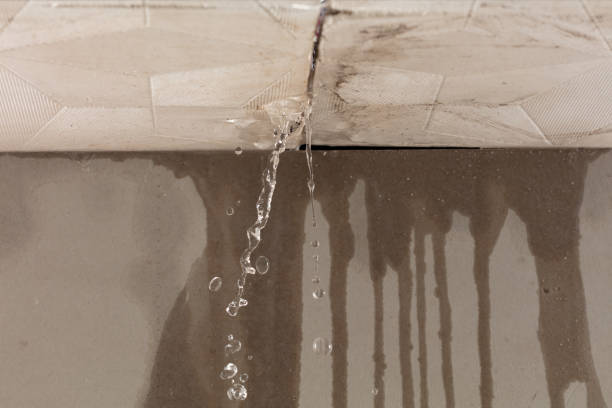
A running-water sound when every fixture in the house is off is a strong sign of a hidden leak feeding your rising bill.
Wallpaper that lifts at the seams after being fine for years is often a sign that humidity or a slow leak has changed the moisture level inside that wall.
Any visible mold, even a small patch in a corner or along a baseboard, means conditions behind that surface have supported growth for a while and the moisture source needs to be found, not just the mold wiped away.
Our Water Damage Repair process covers every stage of a water loss, from the first extraction pass to the final coat of paint, so you're never left coordinating separate contractors mid-project.
Standing water gets removed with commercial extraction equipment first, then we run moisture readings across every affected surface so the drying plan targets what's actually still wet, not what looks dry on the surface.
Drying logs track humidity, surface moisture, and airflow at every checkpoint, so you get documented proof the structure is dry before we close out the job — useful for your insurance claim too.
Our sewage cleanup protocol follows IICRC S500 contamination standards, isolating the affected area, removing unsalvageable materials, and disinfecting every surface that had contact with blackwater.
Once structural drying is underway, we apply antimicrobial treatments to studs, subfloor, and other porous surfaces to stop mold colonies before they establish, especially in areas that stayed wet more than 48 hours.
The same team that documented the damage and dried the structure hands off directly to reconstruction, which keeps the whole timeline shorter and the paperwork simpler.
Furniture, documents, and electronics affected by water intrusion get assessed on-site, with salvageable items cleaned and stored while unsalvageable items are documented for your claim.


A real person answers, gathers the details of your water loss, and routes the closest available crew immediately.
The assessment sets the entire plan — skipping it or rushing it is how jobs end up with hidden moisture pockets months later.
Extraction and drying run as one continuous process rather than two separate visits, which keeps the timeline tighter.
Once moisture readings confirm the structure is dry, we hand you documentation and move into any needed reconstruction.
Every technician carries IICRC certification and our crews are fully insured for your protection on every job.
Local staging means shorter drive times, which matters most in the first hour after a water loss.
Flat-rate pricing means the number we quote is the number you pay, regardless of how long the drying cycle takes.
If a drying target isn't met on the first pass, we extend equipment placement at no extra charge until moisture readings confirm the structure is dry.
We'd rather run drying equipment an extra day at our own cost than close out a job with a moisture reading we're not confident in.
That same standard applies whether it's a single flooded bathroom or a full commercial loss — the sign-off criteria don't change based on job size.
Call +1-844-578-1604Our Fowler coverage area spans 81039, with trucks positioned to reach any address in the service radius quickly.
We track call volume by zip code across Fowler to keep crew staffing matched to where emergencies actually happen most often.

"I called in a panic at 11pm and someone actually picked up. The tech here in Fowler had air movers set up before midnight and explained exactly what they were doing and why."
James R., Fowler"They caught mold starting behind our drywall before it spread and contained it properly instead of just painting over the problem like a previous contractor did."
Denise M., Fowler"They didn't cut corners on the contaminated water cleanup even though it would have been faster to skip the sanitization step — that mattered to me given we have young kids in the house."
Marcus T., Fowler"Fast response, clear pricing, and they coordinated directly with my insurance adjuster which saved me a huge headache during a stressful week."
Priya S., Fowler"Drying logs were shared with us daily so we always knew exactly where the job stood, not just a vague 'it's drying' update."
Carlos V., Fowler"Coordinating a commercial job around our operating hours could have been a nightmare, but their crew worked around our schedule without us having to ask twice."
Angela F., Fowler"A cracked supply line under the kitchen sink went unnoticed for days and by the time we called, the subfloor was saturated. The crew pulled the damaged material and had drying equipment running within the hour."
Tyrone B., Fowler"Storm runoff got into our crawl space and the smell alone told us something was wrong. The crew found the vapor barrier had failed and fixed the actual cause, not just the symptom."
Wendy K., Fowler